

Does Hell Exist? A Scriptural Examination of Sheol, Hades, and the Abode of the Dead
It All Begins Here
Introduction
Many people have been taught that hell is a place where the wicked burn forever immediately after death. Others believe that there is no hell at all and that the dead simply cease to exist. Among many Hebrew Israelite believers, however, there is a different understanding.
According to this view, "hell" is a term used in Scripture to describe the realm of the dead, known in Hebrew as Sheol and in Greek as Hades. This realm serves as the temporary dwelling place of departed souls until the resurrection and final judgment. Within this place there are divisions: the righteous await in peace, often associated with Abraham's Bosom, while the wicked are held in sorrow and torment awaiting judgment.
This understanding is supported by passages from the Old Testament, the New Testament, and the Apocrypha.
The Meaning of Hell in Scripture
The Hebrew word most commonly translated as "hell" in the Old Testament is Sheol.
Psalm 16:10
"For thou wilt not leave my soul in hell; neither wilt thou suffer thine Holy One to see corruption."
The word translated "hell" here is Sheol, the realm of the dead.
Likewise, Jacob expected to go there after mourning Joseph.
Genesis 37:35
"For I will go down into the grave unto my son mourning."
The Hebrew word rendered "grave" is also Sheol.
Both righteous and wicked were said to descend to Sheol after death.
Sheol as the Abode of Departed Souls
The Scriptures describe Sheol as a place beneath the earth where the dead reside.
Isaiah 14:9
"Hell from beneath is moved for thee to meet thee at thy coming."
The prophet describes departed spirits being present in this realm.
Job 14:13
"O that thou wouldest hide me in the grave, that thou wouldest keep me secret, until thy wrath be past."
Job viewed Sheol as a temporary place of waiting until God's appointed time.
The Testimony of the Apocrypha
One of the clearest descriptions appears in the Apocrypha.
2 Esdras 7:75-101
This passage describes what happens to souls after death. It teaches that the righteous experience rest and joy while awaiting their reward, whereas the wicked experience fear and sorrow as they await judgment.
The text presents an intermediate state before the final resurrection.
Wisdom of Solomon 3:1
"But the souls of the righteous are in the hand of God, and there shall no torment touch them."
The righteous dead are portrayed as being preserved by God while awaiting their reward.
Abraham's Bosom
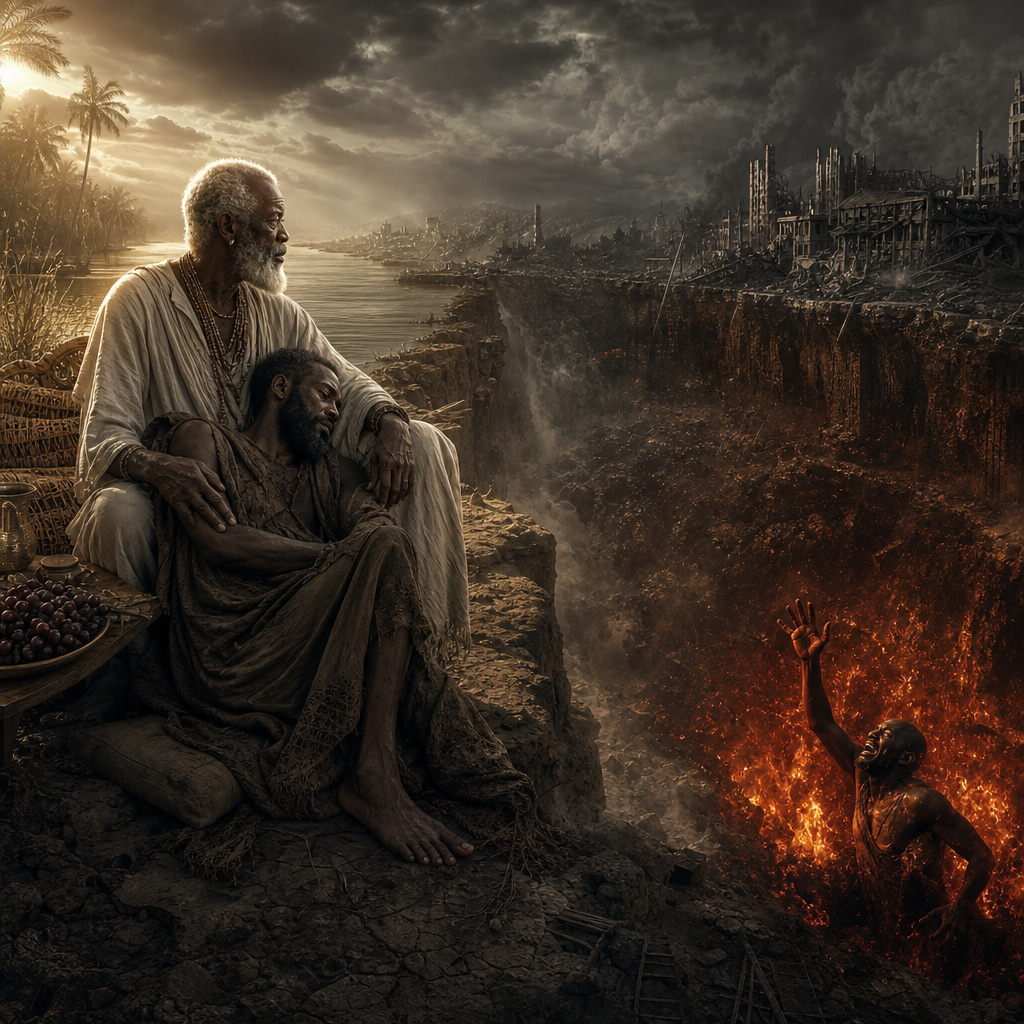
One of the most important New Testament passages concerning the state of the dead is the account of Lazarus and the rich man.
Luke 16:22-23
"And it came to pass, that the beggar died, and was carried by the angels into Abraham's bosom: the rich man also died, and was buried; And in hell he lift up his eyes, being in torments."
The account describes two distinct conditions after death:
Abraham's Bosom, a place of comfort.
A place of torment for the wicked.
The Great Gulf
Christ further explains that a separation exists between the righteous and the wicked.
Luke 16:26
"And beside all this, between us and you there is a great gulf fixed."
According to this understanding, the realm of the dead contains divisions that separate the righteous from the wicked while both await the resurrection.
Christ Descended Into the Lower Parts
The New Testament teaches that Christ descended into the lower parts of the earth.
Ephesians 4:9
"Now that he ascended, what is it but that he also descended first into the lower parts of the earth?"
Likewise, Peter writes:
1 Peter 3:18-20
"Being put to death in the flesh, but quickened by the Spirit: By which also he went and preached unto the spirits in prison."
These passages are often understood as referring to Christ's activity among departed spirits after His death and before His resurrection.
Hades and the Resurrection
The Greek equivalent of Sheol is Hades.
The book of Revelation teaches that Hades itself will eventually surrender its dead.
Revelation 20:13
"And death and hell delivered up the dead which were in them."
This demonstrates that hell is not the final destination of mankind.
Rather, it is a temporary holding place before judgment.
The Final Judgment
After the resurrection comes judgment.
Revelation 20:12
"And I saw the dead, small and great, stand before God."
Following judgment, death and hell are destroyed.
Revelation 20:14
"And death and hell were cast into the lake of fire."
This passage distinguishes hell from the lake of fire.
If hell itself is cast into the lake of fire, then hell and the lake of fire cannot be the same thing.
The Second Death
The final punishment of the wicked is called the second death.
Revelation 20:14
"This is the second death."
Many Hebrew Israelite believers understand this to mean complete destruction after judgment rather than endless conscious torment.
This understanding is often connected to passages such as:
Malachi 4:1
"The day cometh, that shall burn as an oven... and shall leave them neither root nor branch."
Psalm 37:20
"The wicked shall perish."
The final judgment results in the destruction of the wicked rather than their eternal preservation in suffering.
The Hope of the Righteous
The righteous do not remain forever in Abraham's Bosom or Sheol.
They await the resurrection.
Daniel 12:2
"And many of them that sleep in the dust of the earth shall awake."
1 Thessalonians 4:16
"The dead in Christ shall rise first."
Their ultimate reward is not merely rest among the dead but everlasting life in the Kingdom of God.
Conclusion
According to this interpretation of Scripture, hell exists as the realm of departed souls, known as Sheol in Hebrew and Hades in Greek. It is a temporary abode where the dead await resurrection and judgment. The righteous are comforted in a place associated with Abraham's Bosom, while the wicked await judgment in sorrow and torment, separated by a great gulf.
The final destiny of mankind is determined not in Sheol or Hades, but at the resurrection and judgment seat of God. At that time the righteous inherit eternal life, while the wicked face the second death. Ultimately, even death and hell themselves will be destroyed, and God's kingdom will endure forever.
Reincarnation or Regeneration | What’s the difference.
It All Begins Here
I'd suggest a title such as "Reincarnation or Regeneration? What the Bible Really Teaches About Life, Death, and Judgment" or "Man Dies Once: A Biblical Refutation of Reincarnation."
Introduction
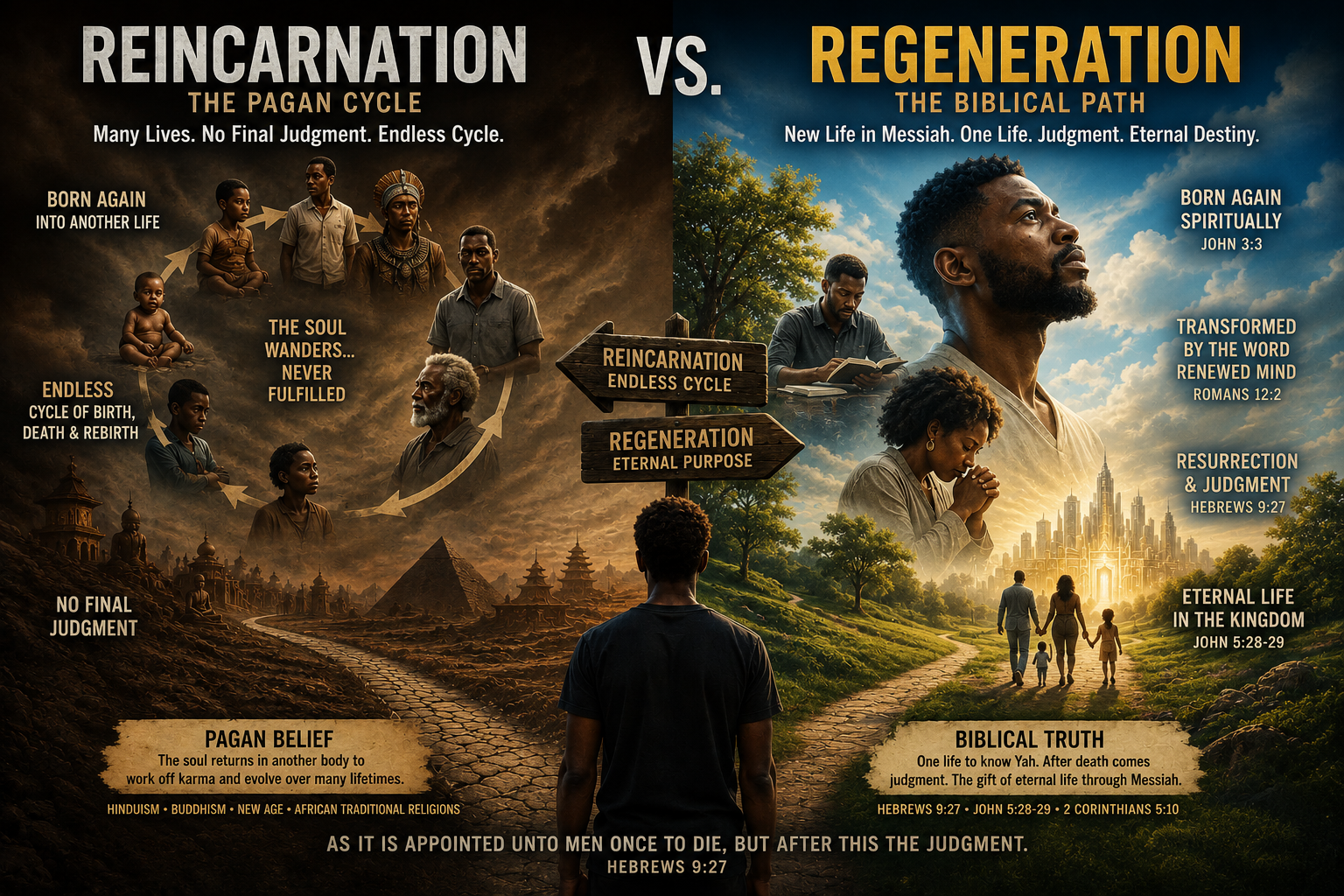
Many religions and philosophies teach the doctrine of reincarnation—the belief that after death a person returns to earth in another body to live multiple lives. This concept is common in Hinduism, Buddhism, and various mystical traditions. However, the Scriptures teach a very different doctrine. The Bible teaches that man lives once, dies once, and afterward faces judgment. Rather than reincarnation, the Scriptures teach regeneration: a spiritual renewal through faith and obedience that ultimately culminates in the resurrection of the dead.
Understanding the difference between reincarnation and regeneration is essential because these two doctrines are fundamentally opposed to one another.
What Is Reincarnation?
Reincarnation is the belief that the soul repeatedly returns to earth in different bodies. According to this doctrine, a person may live hundreds or even thousands of lives, gradually improving through successive incarnations.
The idea assumes:
Multiple earthly lives.
Repeated deaths and rebirths.
A cycle from which souls must eventually escape.
No final judgment after a single lifetime.
This teaching is absent from the Scriptures and contradicts the biblical doctrine of resurrection and judgment.
Man Dies Once
The clearest biblical statement against reincarnation is found in Hebrews:
"And as it is appointed unto men once to die, but after this the judgment." (Hebrews 9:27)
The Bible does not say men die repeatedly and return to live new lives. It says man dies once and afterward faces judgment.
The sequence is simple:
Life
Death
Judgment
There is no mention of returning as another person, animal, or future human being.
The Dead Await the Resurrection
The Scriptures consistently teach resurrection rather than reincarnation.
"Marvel not at this: for the hour is coming, in the which all that are in the graves shall hear his voice, And shall come forth..." (John 5:28-29)
Notice that those who died are still themselves. They are raised from their graves and judged according to their works.
Likewise, the prophet Daniel wrote:
"And many of them that sleep in the dust of the earth shall awake, some to everlasting life, and some to shame and everlasting contempt." (Daniel 12:2)
The dead do not return in new bodies throughout history. They sleep until the appointed resurrection.
The Resurrection of Yahawashi
The Messiah Himself provides the pattern.
"For I delivered unto you first of all that which I also received, how that Christ died for our sins according to the scriptures; And that he was buried, and that he rose again the third day..." (1 Corinthians 15:3-4)
Yahawashi did not reincarnate into another person. He was resurrected.
The same body that died was raised in glory. This is the biblical hope for believers.
What Is Regeneration?
While the Bible rejects reincarnation, it teaches regeneration.
Regeneration is not receiving a new physical body in another lifetime. It is the spiritual renewal of a person through the Word of God.
Yahawashi said:
"Except a man be born again, he cannot see the kingdom of God." (John 3:3)
Nicodemus mistakenly thought Yahawashi was speaking about a second physical birth.
"Can he enter the second time into his mother's womb, and be born?" (John 3:4)
Yahawashi explained that He was speaking spiritually.
The new birth is a transformation of the mind and spirit, not a return to earth as another person.
Regeneration Through the Word
The apostles taught that believers are regenerated through the Word of God.
"Being born again, not of corruptible seed, but of incorruptible, by the word of God..." (1 Peter 1:23)
The transformation begins in this life as a person repents, obeys God's commandments, and follows Yahawashi.
Paul describes this process:
"Be ye transformed by the renewing of your mind..." (Romans 12:2)
This is regeneration—a change of heart, mind, and conduct.
The Future Regeneration
The Scriptures also use the word "regeneration" to describe the restoration of all things in the Kingdom.
Yahawashi said:
"In the regeneration when the Son of man shall sit in the throne of his glory..." (Matthew 19:28)
This refers to the future age when the Kingdom is established and the righteous are resurrected and glorified.
Again, this is not reincarnation. It is the renewal and restoration of creation under the reign of the Messiah.
Elijah and John the Baptist
Some claim that John the Baptist was Elijah reincarnated.
However, the Scriptures never teach this.
The angel declared concerning John:
"And he shall go before him in the spirit and power of Elias." (Luke 1:17)
John came in the same spirit and mission as Elijah, not as Elijah reborn.
When asked directly, John answered:
"Art thou Elias? And he saith, I am not." (John 1:21)
If John were literally Elijah reincarnated, his answer would have been yes.
Instead, he fulfilled the prophetic role of Elijah.
Why Reincarnation Contradicts the Gospel
Reincarnation undermines several core biblical doctrines:
It Denies the Resurrection
The Bible teaches resurrection from the dead.
"For the trumpet shall sound, and the dead shall be raised incorruptible." (1 Corinthians 15:52)
It Denies Final Judgment
The Bible teaches one judgment following one life.
"We must all appear before the judgment seat of Christ." (2 Corinthians 5:10)
It Makes the Sacrifice of Yahawashi Unnecessary
If souls are purified through countless lifetimes, there is no need for redemption through the blood of the Messiah.
Yet Scripture teaches:
"Neither is there salvation in any other." (Acts 4:12)
It Contradicts the Hope of the Saints
The saints look forward to resurrection and eternal life, not another cycle of earthly existence.
"And this is the promise that he hath promised us, even eternal life." (1 John 2:25)
Conclusion
The doctrine of reincarnation is a pagan belief that finds no support in the Scriptures. The Bible teaches that man lives once, dies once, and afterward faces judgment. The hope of the faithful is not to return repeatedly to earth in different bodies but to receive regeneration through the Word of God and ultimately be raised in the resurrection unto eternal life.
The Scriptures present a clear path: repentance, faith, obedience, regeneration in this life, resurrection at the coming of Yahawashi, and judgment according to one's works. This is the biblical doctrine, and it stands in direct opposition to the concept of reincarnation.
"And as it is appointed unto men once to die, but after this the judgment." (Hebrews 9:27)
The believer's hope is not another life on earth, but everlasting life in the Kingdom of God.
Do We Go to Heaven When We Die? A Biblical Examination of Death, Sheol, and the Judgment
It All Begins Here
Introduction
One of the most common teachings in modern Christianity is that when a righteous person dies, they immediately go to heaven to live with God forever. Many imagine their departed loved ones watching over them from heaven, looking down on the affairs of the earth.
But is this what the Scriptures actually teach?
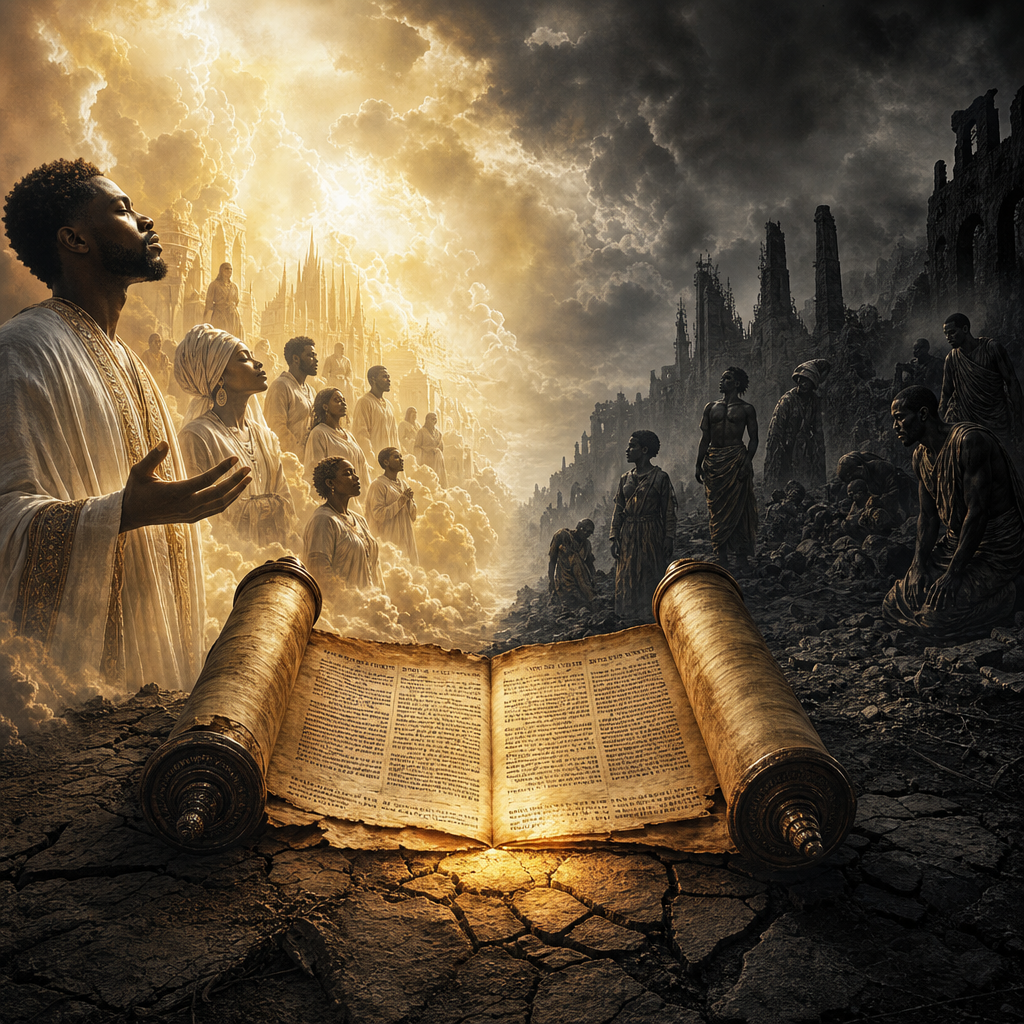
When we examine the Bible carefully, we find a different picture. The Scriptures teach that when a man dies, his spirit returns to God who gave it, while the dead await the resurrection and judgment. The dead enter Sheol (Hebrew) or Hades (Greek), the realm of the dead. According to the words of Yahawashi, this place contains separate regions for the righteous and the wicked.
The hope of the saints is not immediate entrance into heaven after death, but resurrection at the return of the Messiah.
The Breath Returns to God
When man was created, God formed him from the dust and gave him the breath of life.
"And the LORD God formed man of the dust of the ground, and breathed into his nostrils the breath of life; and man became a living soul."
— Genesis 2:7
Notice that man is not given a soul; man becomes a living soul.
At death, the process is reversed.
"Then shall the dust return to the earth as it was: and the spirit shall return unto God who gave it."
— Ecclesiastes 12:7
The body returns to the earth, and the spirit, or life-force given by God, returns to Him.
This verse does not say that people immediately enter heaven to receive their reward.
The Dead Go to Sheol
Throughout the Old Testament, both the righteous and wicked were said to go to Sheol, the abode of the dead.
Jacob said:
"For I will go down into the grave unto my son mourning."
— Genesis 37:35
The word translated "grave" is Sheol.
Job also spoke of going there:
"O that thou wouldest hide me in the grave, that thou wouldest keep me secret, until thy wrath be past."
— Job 14:13
The Scriptures consistently describe Sheol as the place where departed souls await the resurrection.
Yahawashi Revealed Two Compartments in the Realm of the Dead
In Luke 16, Yahawashi gives the account of the rich man and Lazarus.
"And it came to pass, that the beggar died, and was carried by the angels into Abraham's bosom: the rich man also died, and was buried."
— Luke 16:22
Lazarus entered Abraham's Bosom, a place of comfort.
The rich man entered torment.
"And in hell he lift up his eyes, being in torments..."
— Luke 16:23
Between them existed a great gulf.
"And beside all this, between us and you there is a great gulf fixed."
— Luke 16:26
This passage shows that the realm of the dead contains separated regions: one for the righteous and another for the wicked.
Neither Lazarus nor the rich man had yet received the final judgment, for the resurrection had not occurred.
The Dead Do Not Participate in the Affairs of the Living
Many believe deceased relatives are watching over them from heaven.
The Scriptures teach otherwise.
"For the living know that they shall die: but the dead know not any thing."
— Ecclesiastes 9:5
Again:
"Also their love, and their hatred, and their envy, is now perished; neither have they any more a portion for ever in any thing that is done under the sun."
— Ecclesiastes 9:6
The dead no longer participate in the activities of the living.
They do not guide the living, communicate with the living, or intervene in earthly affairs.
Job declared:
"His sons come to honour, and he knoweth it not; and they are brought low, but he perceiveth it not of them."
— Job 14:21
Even when events occur in their own families, the dead are unaware of them.
David Did Not Ascend into Heaven
Many assume that righteous men of old went directly to heaven.
However, Peter stated:
"For David is not ascended into the heavens."
— Acts 2:34
David, a man after God's own heart, was still awaiting the resurrection.
Peter further said:
"Men and brethren, let me freely speak unto you of the patriarch David, that he is both dead and buried, and his sepulchre is with us unto this day."
— Acts 2:29
If David had not ascended into heaven, then the common belief that all righteous people immediately enter heaven deserves serious examination.
The Reward Comes at the Resurrection
The Scriptures consistently place the reward of the righteous at the resurrection.
Yahawashi taught:
"The hour is coming, in the which all that are in the graves shall hear his voice, And shall come forth."
— John 5:28-29
Daniel prophesied:
"And many of them that sleep in the dust of the earth shall awake, some to everlasting life, and some to shame and everlasting contempt."
— Daniel 12:2
Paul likewise taught:
"For the Lord himself shall descend from heaven with a shout... and the dead in Christ shall rise first."
— 1 Thessalonians 4:16
The dead await resurrection. Their reward is given when the Messiah returns.
Judgment Comes After Death
The Bible teaches a clear sequence:
"And as it is appointed unto men once to die, but after this the judgment."
— Hebrews 9:27
Death is followed by judgment, not reincarnation, and not an immediate entrance into the eternal Kingdom.
The final judgment occurs after the resurrection of the dead.
The Hope of the Saints
The hope of believers is not to spend eternity as disembodied spirits in heaven.
The hope is resurrection and life in the Kingdom of God.
Paul wrote:
"If in this life only we have hope in Christ, we are of all men most miserable."
— 1 Corinthians 15:19
The resurrection is the foundation of biblical hope.
"For as in Adam all die, even so in Christ shall all be made alive."
— 1 Corinthians 15:22
Conclusion
The Scriptures teach that when a person dies, the body returns to the earth and the spirit returns to God who gave it. The dead enter Sheol or Hades, the realm of the dead. As shown in Luke 16, the righteous and wicked are separated into distinct regions while awaiting the resurrection.
The dead are not watching over their families from heaven. They have no further participation in the affairs of the living. Their hope, and ours, is the resurrection at the coming of Yahawashi.
The reward of the righteous and the punishment of the wicked occur according to God's judgment at the appointed time.
Until then, the dead await the day when:
"All that are in the graves shall hear his voice, and shall come forth."
— John 5:28-29
Why Yahawah Does Not Want Us to Worship or Consult the Dead
It All Begins Here
The Scriptural View of Death, Spirit, and True Worship
Across the Scriptures, a consistent theme appears: life belongs to Yahawah alone, and worship is directed only to Him. The dead are described as unconscious, without knowledge or participation in the affairs of the living. Because of this, believers are repeatedly warned not to seek guidance, messages, or worship connected to the dead.
The Dead Know Nothing
One of the clearest teachings in Scripture is that death is a state of silence and inactivity.
“For the living know that they will die, but the dead know nothing…” (Ecclesiastes 9:5)
“Also their love, their hatred, and their envy have now perished…” (Ecclesiastes 9:6)
“There is no work or device or knowledge or wisdom in the grave…” (Ecclesiastes 9:10)
These verses emphasize that once a person dies, their consciousness ends. They do not continue observing, speaking, or interacting with the living world.
This foundation is important because it removes the idea that the dead can receive worship, deliver messages, or return to influence human affairs.
The Dead Do Not Praise Yahawah
Scripture repeatedly connects praise with life and breath.
“The dead praise not Yahawah, neither any that go down into silence.” (Psalm 115:17)
“In death there is no remembrance of thee…” (Psalm 6:5)
Worship is consistently described as something living beings do. Once breath returns to the Creator, the ability to worship ceases until resurrection.
Yahawah Forbids Consulting the Dead
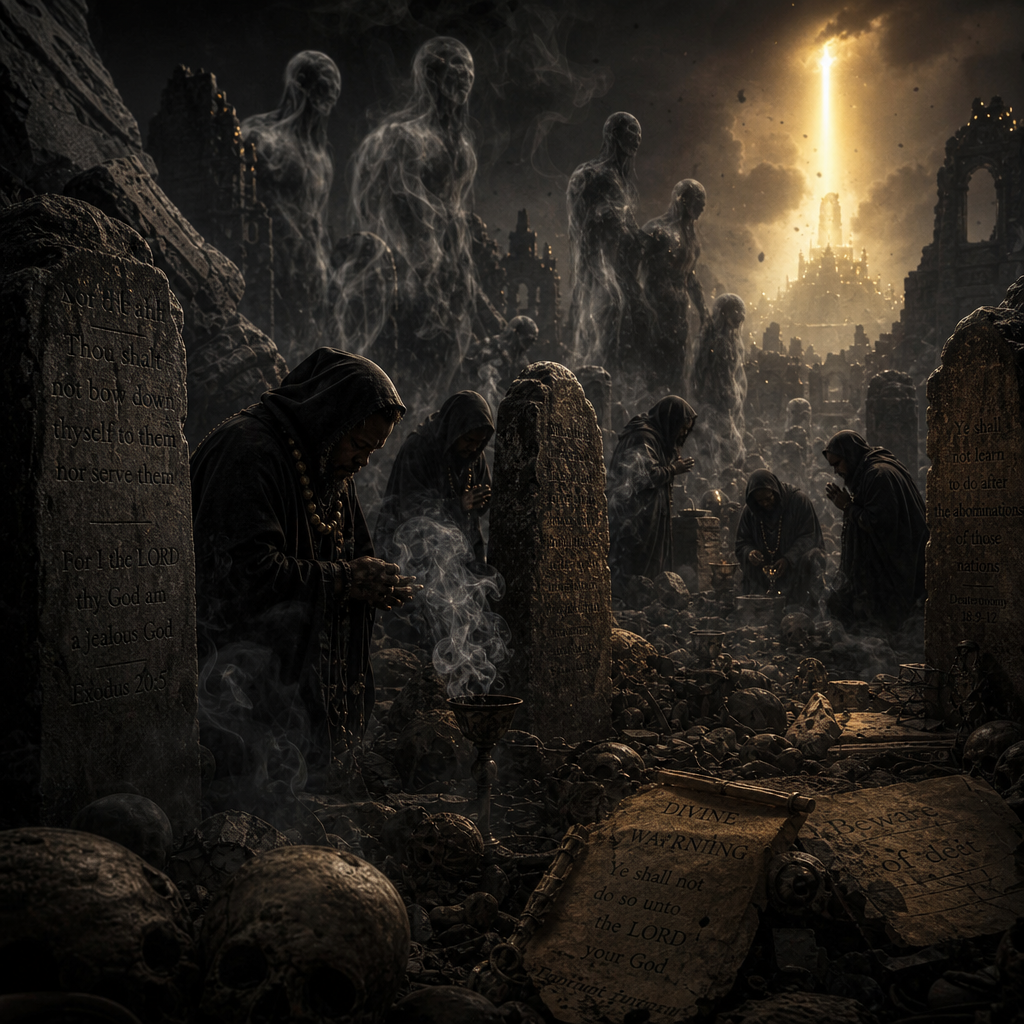
The law given through Moses clearly forbids attempting to contact the dead or use spiritual mediums.
“Do not turn to mediums or spiritists; do not seek them out…” (Leviticus 19:31)
“There shall not be found among you… a consulter with familiar spirits, or a necromancer.” (Deuteronomy 18:10–12)
The reason given is that such practices are detestable and separate people from trust in Yahawah.
Instead of seeking the dead, believers are instructed to seek Yahawah directly:
“When they say unto you, Seek unto them that have familiar spirits… should not a people seek unto their God?” (Isaiah 8:19)
Dreams and False Spiritual Deception
Scripture also warns that spiritual deception can come through visions, dreams, or misleading spirits.
“If there arise among you a prophet, or a dreamer of dreams… you shall not listen…” (Deuteronomy 13:1–3)
This warning is important because experiences involving dreams of the dead are not automatically divine communication. The Scriptures caution that not every spiritual experience originates from Yahawah.
Instead, believers are instructed to test all spirits:
“Beloved, believe not every spirit, but try the spirits whether they are of Yahawah…” (1 John 4:1)
Spirits Can Deceive and Imitate
The Scriptures also show that spiritual forces can imitate voices or appearances to mislead.
“Satan himself is transformed into an angel of light.” (2 Corinthians 11:14)
This highlights the danger of assuming that any spiritual encounter with the dead is genuine communication. The biblical warning is consistent: deception is possible, and truth must be measured against the Word of Yahawah.
True Worship Belongs Only to Yahawah
Throughout Scripture, worship of anything other than the Most High is strictly forbidden.
“You shall worship Yahawah your God, and Him only shall you serve.” (Deuteronomy 6:13)
“I am Yahawah; that is My name; My glory will I not give to another.” (Isaiah 42:8)
Because the dead have no authority, awareness, or power, worship directed toward them is considered misplaced and spiritually dangerous.
Conclusion
The consistent biblical teaching is that:
The dead are unconscious and do not know anything
They do not communicate with the living
Worship belongs only to Yahawah
Consulting the dead is forbidden
Dreams and spiritual experiences must be tested carefully
Deception in the spirit realm is real and warned against
Rather than seeking the dead, Scripture directs believers to seek Yahawah directly, trust His Word, and remain grounded in obedience and truth.